REVIEW · OUTER BANKS
Beginner Hang Gliding Lesson
Book on Viator →Operated by Kitty Hawk Kites · Bookable on Viator
Dune gliding makes fear feel optional. At Jockey’s Ridge State Park near Kitty Hawk, you get 5 training flights plus a 30-minute Ground School and all gear included. The trade-off: the hike over loose sand to the launch spot and sun exposure up top can be genuinely tough.
I love the way this is built for first-timers, with a clear flow from classroom to dunes. You’ll travel with a small group (max 3), get fitted for a helmet and harness, and instructors like Ben & Legs, Rich & Megan, Drake, Larson, and Brad coach you step-by-step during your flights. One consideration: the early flights are about technique and control, so expect shorter, closer-to-the-ground training than big free-flight fantasies.
In This Review
- Quick hits on this beginner hang gliding lesson
- Arriving at Kitty Hawk’s launch spot: what Jockey’s Ridge really feels like
- Ground School: the 30 minutes that sets your whole flight plan
- Gear up on-site: helmet and harness fit matters more than you think
- The walk to the dunes: where many first-timers feel the workout
- Launch day flow: how the lesson runs from setup to 5 flights
- Your training flights: what you’ll focus on as a first-timer
- Instructors and group size: why “small” really matters here
- Who this is best for (and who should reconsider)
- Weather and wind: why your flight count can change
- What you should bring: small items that prevent a big day-ender
- Pricing and value: is $149 worth it in the real world?
- The practical reality of success: how to get the most out of your 5 flights
- Safety notes you should take seriously before you book
- Should you book this beginner hang gliding lesson?
- FAQ
- FAQ
- How long is the beginner hang gliding lesson?
- Where does the lesson take place?
- How many training flights do I get?
- What’s included in the price?
- What should I bring since it’s not included?
- Do I need to meet a weight requirement?
- Is this lesson only for experienced pilots?
- Where do I meet the provider?
- What happens if the weather is poor?
Quick hits on this beginner hang gliding lesson
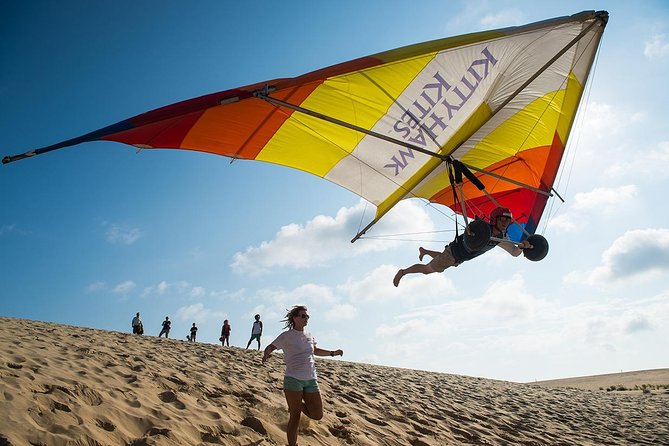
- 30-minute Ground School that’s hands-on and interactive before you ever run for air
- Five training flights per person over about two hours, built to improve with each try
- Jockey’s Ridge launch views near Kitty Hawk and close to where the Wright Brothers flew
- Gear included (hang glider, helmet, harness), so you’re not sourcing equipment in advance
- Small groups (max 3), which makes it easier to get real coaching attention
- A real physical element: loose sand walking and running speed on the dunes
Arriving at Kitty Hawk’s launch spot: what Jockey’s Ridge really feels like
This beginner hang gliding lesson is anchored at Jockey’s Ridge State Park, in the Outer Banks area of North Carolina. That matters, because Jockey’s Ridge is basically a giant sand dune system, not a smooth stadium hill. The setting is part of the point: you get that classic “how is this real?” feeling while still learning in a controlled way.
You start from a meeting point at 300 W Carolista Dr, Nags Head, and the session ends back there. The day is designed around one main location, so you’re not spending time shuttling around the coast. It also keeps things simple if you’re combining this with other Outer Banks activities.
One more thing I appreciate: you’re not just dropped at a windy hillside and told good luck. The structure is classroom first, then dunes, then back for a wrap-up. That flow helps your brain switch from watching to doing.
Ground School: the 30 minutes that sets your whole flight plan
Your lesson begins with Ground School, a 30-minute interactive introduction. This is where you learn the basics of how the hang glider works, how your body position matters, and what to focus on when it’s time to move fast and commit.
For beginners, this is the make-or-break part. If you arrive thinking hang gliding is mainly about bravery, Ground School reframes it as technique. You learn what matters most, what to ignore, and how to listen for cues when your nerves kick in.
In a small operation with only a few people in the session, Ground School also helps instructors tailor the moment. You’re not competing with a long group schedule where your questions get lost in the shuffle.
Gear up on-site: helmet and harness fit matters more than you think
After Ground School, there’s time to grab your stuff, use the bathroom, and get geared up. You’re issued a helmet and harness, and you carry that gear out to the sand dunes.
From an anxiety standpoint, this is great value. You don’t have to worry about sizing your own equipment or guessing whether something fits correctly. From a safety standpoint, it’s also huge because hang gliding is about stable positioning and consistent control.
Plan for sand and wind. Even when you do everything right, the dunes are still the dunes. Your gear will feel different once you’re moving over soft ground, so your best move is to wear a calm, practical mindset: listen, adjust, and then follow the plan.
The walk to the dunes: where many first-timers feel the workout
Once everyone is geared up, the group walks out to Jockey’s Ridge for the flight portion. Here’s the honest consideration: this part can be strenuous because the sand is loose and the dunes require real effort to climb to the launch spot.
Some people also describe a steep section where you need to get yourself positioned between glides. In plain terms, you’re doing a mix of hiking and quick movement while wearing harness equipment. If you’re not used to walking on soft sand, it can feel harder than expected.
Also, the top of the dunes can be exposed. One common theme is that there isn’t much shade once you’re up there, so you can overheat faster than you think. If it’s warm or sunny, treat this like an outdoor endurance activity, not a quick photo stop.
Launch day flow: how the lesson runs from setup to 5 flights
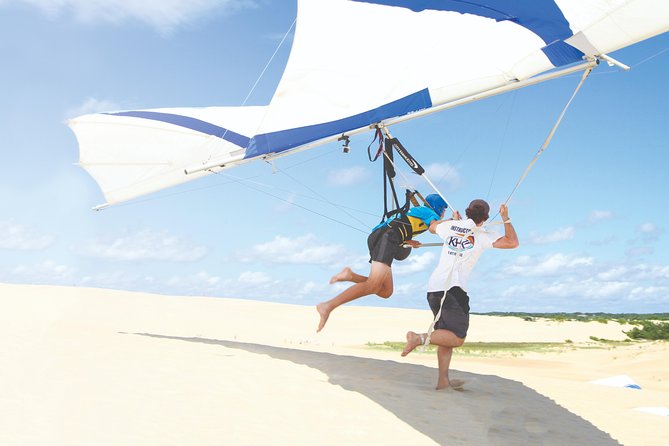
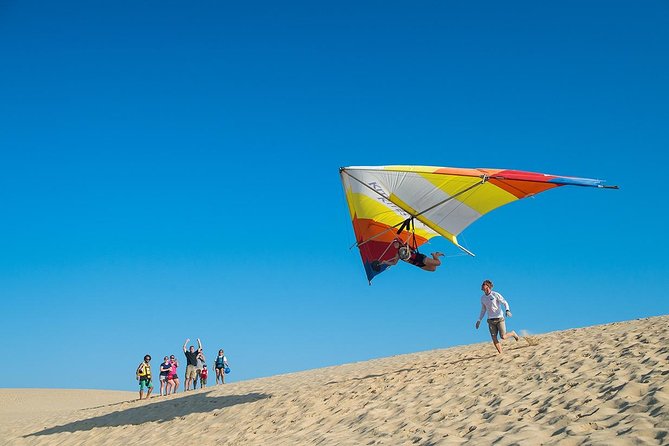
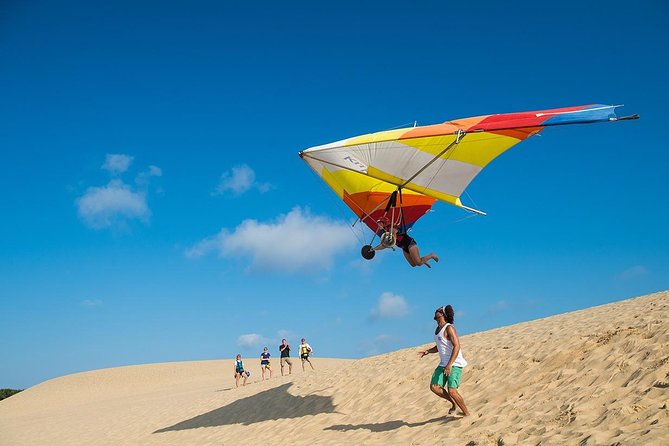
After you reach the launch area, you get your first training flight and then keep moving through the set. Each participant receives 5 training flights per person over roughly the next two hours.
That pacing is smart. You’re not just doing one try and hoping for the best. The structure lets you refine the basics flight after flight—especially your timing and your response to instructor cues. Many first-timers leave saying the coaching made a noticeable difference across the sequence.
You should also expect that these are training flights, not a “stick around for half an hour and roam” adventure. Some people go in imagining longer, higher glides without being controlled to the ground. The reality of beginner instruction is closer to technique practice: you learn the feel of control while staying within the training approach instructors use for safety.
When your flights are done, the group returns to the hang gliding school for a wrap-up and to review what you learned. That final piece is worth it, because it turns the thrill into something you can actually remember and talk through.
Your training flights: what you’ll focus on as a first-timer
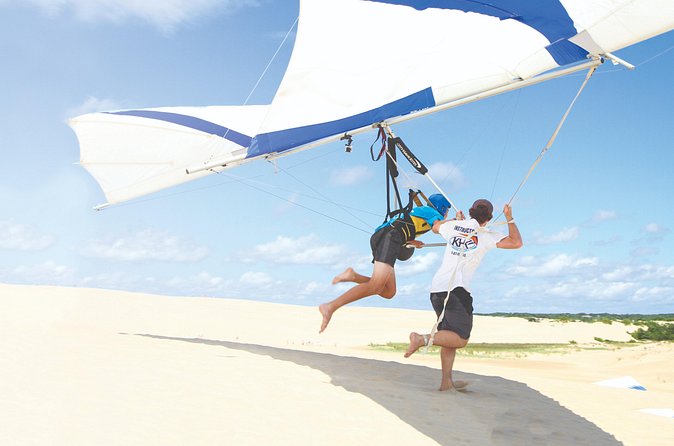
Hang gliding is a strange sport at first: your body wants to do one thing, but the glider wants you to do another. The training flights are built to teach you how to reconcile those two signals.
The most helpful way to think about your 5 flights is as five checkpoints:
- You start by getting the basics into your hands.
- You practice the exact movement timing and body positioning your instructor cues.
- You correct what felt off on the previous flight.
- You rebuild confidence each time you land and reset.
- You finish with a clearer sense of what you did right.
If you’re nervous, good news: the coaching style described by instructors tends to be patient and attentive, with real-time guidance as you’re guided down. Names that came up include Rich and Megan, Drake, Larson, Brad, and Josh. While each instructor has their own personality, the common thread is coaching that stays practical instead of vague.
Instructors and group size: why “small” really matters here
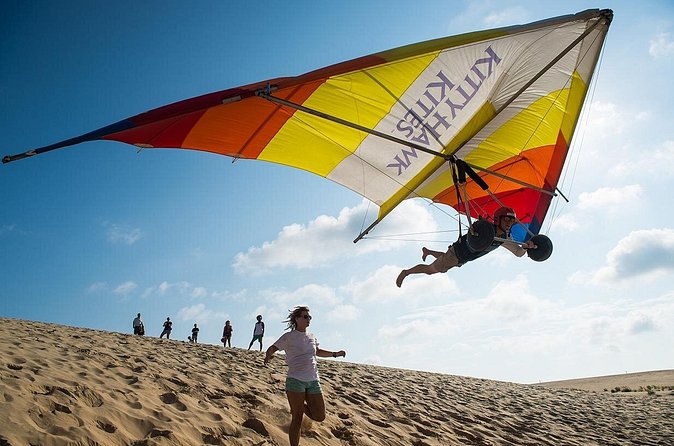
This activity caps at 3 travelers, and you feel it in how the day runs. In a larger group, you’d be waiting longer while others fly, and it would be easier for details to slip past you. In a small class, instructors can keep an eye on everyone’s readiness and help you with quick adjustments.
The coaching you’ll likely get is described as professional, informative, and friendly. Several people mention instructors being enthusiastic without losing attention to safety. A few specific notes that are useful for you as a beginner:
- If you’re anxious, you can lean on the instructor for calm, step-by-step cues.
- If you’re athletic, you still need to listen, because the glider is its own logic.
- If you’re not athletic, you still have a fair shot, as long as you follow instructions and show up ready to work.
Also, if you’re the type who overthinks, the best approach is simple: listen during the instruction, then do exactly what you’re told during the flight sequence. One piece of advice you’ll often hear in this sport fits perfectly here: don’t overthink it.
Who this is best for (and who should reconsider)
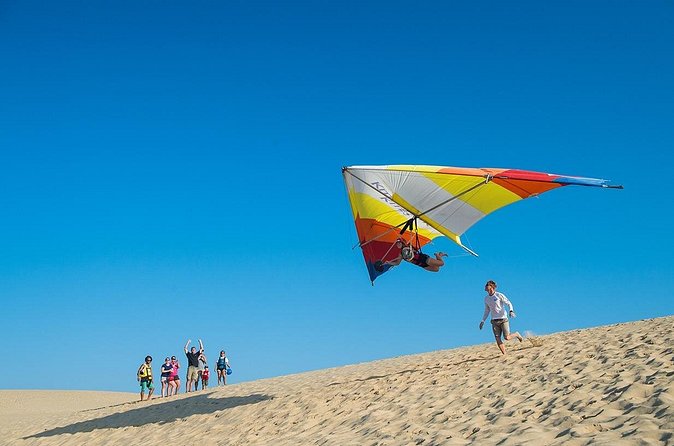
Most travelers can participate, and it’s clearly positioned as a beginner lesson. People taking it ranged widely in age, including teens and adults, so the learning approach isn’t limited to people who live in athletic mode all year.
Still, this is not a sit-and-watch activity. You’re walking over dunes and running with the speed required for training. If you have mobility limits or you get exhausted quickly on soft sand, you’ll want to think carefully.
There’s also a clear weight limit: 235 lbs. If you’re above that limit, you’ll need a different option.
Weather and wind: why your flight count can change
This experience requires good weather, and wind matters. On days when wind is too much or conditions aren’t right, lessons may be shortened or rescheduled. Some people were offered options like switching to another time rather than losing the experience entirely.
That means you should plan your Outer Banks schedule with flexibility. If you’ve packed the day like a machine, you’ll feel the sting if conditions shift. If you’re traveling with a slower itinerary, you’ll roll with it easier.
A practical tip: bring a backup mindset for “what if we don’t get the full lesson.” When conditions are good, the day can be a bucket-list highlight. When conditions aren’t ideal, the best move is to stay patient and take the alternative plan offered.
What you should bring: small items that prevent a big day-ender
The lesson includes hang glider, helmet, and harness, so you’re mostly responsible for comfort. Two items explicitly not included are bottled water and sun protection.
Bring water. The dunes are exposed, you’ll be walking and moving, and wind doesn’t always mean cool temperatures. If you’re dry, your focus drops.
Bring sun protection. One recurring comfort issue is that the top of the dunes has little shade. Plan for skin and eye protection and expect heat to build fast during waiting periods.
If you’re wearing gear to the dunes, keep it simple. The harness and helmet already add bulk and friction, so you want clothes that won’t annoy you while you’re moving on sand. Also, plan for sand. It gets into everything.
Pricing and value: is $149 worth it in the real world?
At $149 per person, the value comes from the structure: 30 minutes Ground School + 5 training flights + included equipment. For many first-timers, the cost is really buying instruction plus a set number of flight attempts, not just the thrill.
You’re also paying for location advantages. Jockey’s Ridge near Kitty Hawk gives you the famous “Wright Brothers area” context, and you’re learning from instructors who guide the details, rather than figuring it out on your own.
If you compare your money to other adventure activities where the “try” is one moment and done, the five-flight format is what makes this feel fair. You get repetition, coaching, and incremental improvement.
The practical reality of success: how to get the most out of your 5 flights
Here’s the playbook I’d recommend based on how the lesson is run and how beginners describe doing well:
- Listen during Ground School like it matters, because it does. You’ll use those cues later when you’re moving fast.
- Follow instructions on the dunes instead of trying to brute-force confidence.
- Stay warm if it’s cool, because cold muscles make everything harder.
- Don’t overthink your last steps right before takeoff. Concentration helps, but panic hurts.
- Move like you’re practicing, not like you’re performing. Training works by repetition.
And if something goes slightly off on one flight, that’s part of the learning loop. Soft sand also helps reduce the sting of mistakes, which is one reason beginners often find it less scary than expected once they’re in it.
Safety notes you should take seriously before you book
A few practical safety points are clearly spelled out:
- Weight limit is 235 lbs.
- You’ll wear helmet and harness, and you should treat fitting and adjustments as part of the lesson, not a quick step.
- The activity depends on good weather, so conditions can affect whether you fly as planned.
Service animals are allowed, and most travelers can participate. If you have questions about suitability, you’ll want to confirm directly with the provider before you go.
Should you book this beginner hang gliding lesson?
If you want a beginner-first experience with a defined coaching plan and five training flights, this is a strong choice. The best fit is someone who can handle walking over dunes, moving quickly when instructed, and spending time outside in sun or wind.
I’d book if:
- You’re excited by hands-on instruction, not just sightseeing.
- You want repetition and feedback across multiple flights.
- You’re traveling to the Outer Banks and want a true, unforgettable activity near Kitty Hawk.
I’d hesitate if:
- You have concerns about walking on loose sand or steep dune steps.
- You’re heat-sensitive and can’t handle long exposed waits without good sun protection.
- You’re looking for long, high, free-flight adventures. Training here is more controlled and technique-focused.
FAQ
FAQ
How long is the beginner hang gliding lesson?
The lesson runs for about 3 hours total.
Where does the lesson take place?
It happens at Jockey’s Ridge State Park in the Outer Banks area.
How many training flights do I get?
You get 5 training flights per person.
What’s included in the price?
The price includes the hang glider, helmet, and harness.
What should I bring since it’s not included?
Bottled water and sun protection are not included, so you should plan to bring them.
Do I need to meet a weight requirement?
Yes. The weight limit for this activity is 235 lbs.
Is this lesson only for experienced pilots?
No, it’s a beginner hang gliding lesson with Ground School instruction before the flights.
Where do I meet the provider?
You start at 300 W Carolista Dr, Nags Head, NC 27959, USA, and the activity ends back at the meeting point.
What happens if the weather is poor?
The experience requires good weather. If it’s canceled due to poor weather, you’ll be offered a different date or a full refund.