REVIEW · NORTHERN VIETNAM
Hanoi Paragliding COMBO: Tandem paraglide + course (full-day)
Book on Viator →Operated by May Paragliding School (Hanoi - Luong Son Bac) · Bookable on Viator
Touching cloud level thrills is surprisingly doable in Northern Vietnam. This one-day Luong Son experience mixes slope training with a proper tandem flight, then feeds you with a Muong lunch before the afternoon turns into trekking and a mountain bonfire.
Two things I especially like: the plan is built for beginners (no prior experience required) and you get hands-on repetition with 10 slope solo flights using single-skin gliders. The only real catch to consider is that your day still depends on flying conditions, so you’re trading a guaranteed long hang time for a structured intro course that fits a tight schedule.
In This Review
- What makes it worth the $77
- Key things to know before you go
- Paragliding in Luong Son: why this intro feels efficient
- Price and value: what $77 buys you in real time
- Pickup, meeting point, and how the day starts
- Orientation and indoor technique (before you ever run)
- Ground training with single-skin gliders: where confidence gets built
- The slope flights: 10 solo practice runs you’ll actually remember
- The instructor factor: certified athletes and what to ask
- Tandem flight: getting the thrill while the pilot handles the heavy lifting
- Lunch at a private stilt clubhouse (Muong cuisine, no rushing)
- Afternoon trekking and the sunset window
- Mountain peak bonfire and the closing ceremony
- Who this course suits best (and who should rethink it)
- Should you book the one-day Hanoi paragliding combo?
- FAQ
- What does the one-day paragliding combo include?
- How many solo flights do I do in this course?
- Do I need prior paragliding experience?
- Are instructors English-speaking?
- Where does the activity start and end?
- Is pickup from Hanoi included?
- What’s the schedule like?
- What gliders do beginners use for the slope flights?
- Is this a private group experience?
- What if I cancel?
What makes it worth the $77
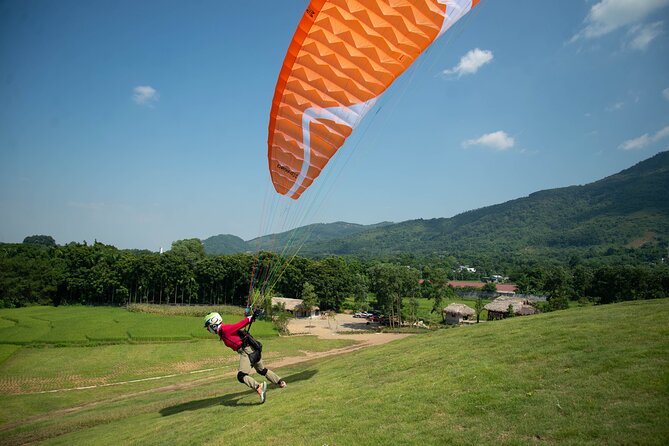
The best part of this combo is how much instruction and flying time it tries to pack into one day. You start indoors with theory and technique, move to ground training, then head out to fly from a low hill with equipment designed for newcomers.
One possible drawback: if you mainly want photos and big views, you may want to pay attention to coaching cues for posture and timing. One review mentioned a mum who wished the trainers taught pose ideas during the sky photos—so ask early and lean into the guidance.
Key things to know before you go
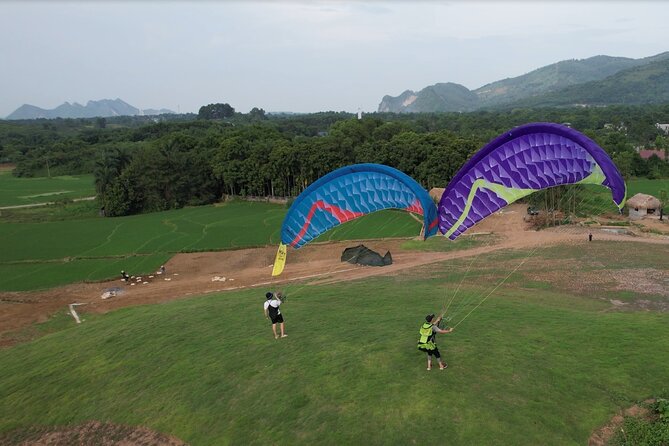
- Beginner structure that still feels real: theory, ground training, then slope flights, not just a one-off tandem ride.
- 10 slope solo flights on single-skin gliders: lots of chances to learn control without going high.
- English-speaking certified athletes with custom-designed beginner gliders: you’re not winging it.
- A tandem flight after the course work: you get that bigger-picture thrill with a pilot onboard.
- Muong lunch at a stilt clubhouse: you recharge right where the training happens.
- Afternoon add-ons beyond flying: trekking and a bonfire ceremony at the mountain peak.
Paragliding in Luong Son: why this intro feels efficient
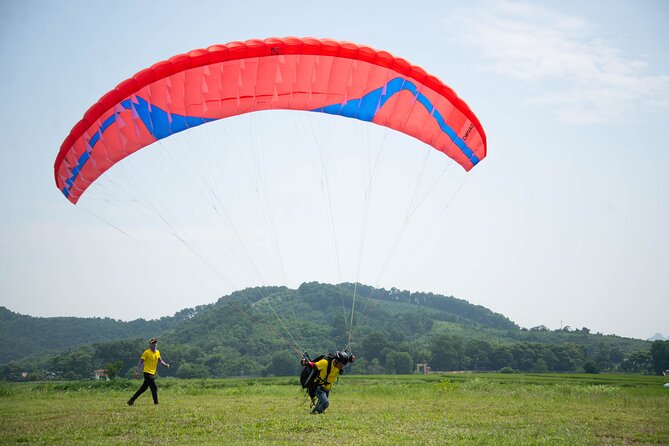
If you’re in Hanoi and you only have one full day, this format makes sense. You’re not spending a weekend chasing wind and waiting around forever. Instead, the day is chopped into clear blocks—orientation, ground work, slope flights, then fun off the hill.
The experience is centered in Luong Son from Hanoi, with pickup offered around 8:00. You’ll get a mix of classroom basics, practice on the hill, and then outdoor time after lunch. It’s a “learn, fly, and continue the day” package rather than a quick drop-off for one flight.
Price and value: what $77 buys you in real time
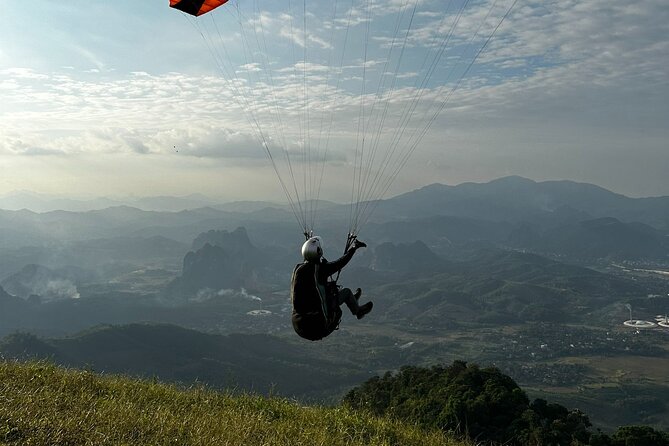
At $77 for a full-day combo, the value is mostly about how the time is allocated. You’re paying for more than one flight. The schedule is built around 10 slope solo flights, plus instruction and a tandem flight, with a trek and a bonfire included in the day’s flow.
Here’s where the math turns favorable for many people:
- You’re getting repeated takeoffs and landings practice from a low hill, which helps you build confidence faster than a single ride.
- You’re working with certified professional paragliding athletes, and the training includes theory and ground technique, not just hands-on guessing.
- You’re also getting a proper break with a Muong lunch, plus more mountain time after.
Could you find cheaper experiences that are only tandem? Possibly. But if you want a structured beginner introduction that actually teaches control concepts, this is the kind of price that feels fair for a full-day program.
Pickup, meeting point, and how the day starts
The day begins with pickup from Hanoi at 8:00. If you’re meeting on your own, the start point is GO! Thăng Long (222 Đ. Trần Duy Hưng, Trung Hoà, Cầu Giấy, Hà Nội 100000). The activity ends back at the meeting point, which is handy when you’re trying to keep your itinerary clean.
The group format is also worth noting: it’s private, meaning only your group participates. That usually helps with pacing and coaching. And there’s a mobile ticket, with confirmation received at the time of booking, which makes it easier to show up without paperwork stress.
Orientation and indoor technique (before you ever run)
At 9:00, you start with orientation and a technique introduction indoors. This is where the course lays the groundwork for how paragliding works at a beginner level. Even if you’re excited, this part matters because slope flying isn’t just thrill—it’s controlled movement.
From the structure, the course aims to build a mental checklist: what you do before takeoff, what you focus on while gliding close to the ground, and what landing habits look like. You also get an English-speaking setup, which is a big deal for beginners. Clear language turns nerves into focus.
Ground training with single-skin gliders: where confidence gets built
After the indoor block, you move to ground training with single-skin gliders around 10:00. If you’ve never handled the wing before, this is likely where you’ll feel the difference between a “try it” event and a real course.
Single-skin gliders used for beginners fit the program’s goal: practice control and feel without pushing your comfort limits. Ground training also helps you learn how to handle the equipment and understand what actions lead to what results. That’s not glamorous, but it’s exactly what makes slope flights feel safer and less random.
The slope flights: 10 solo practice runs you’ll actually remember
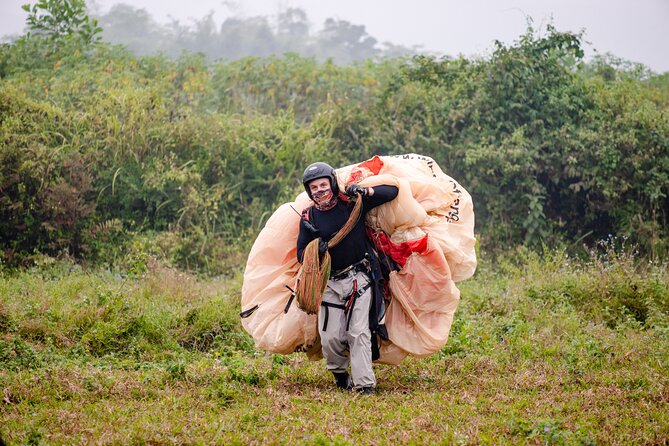
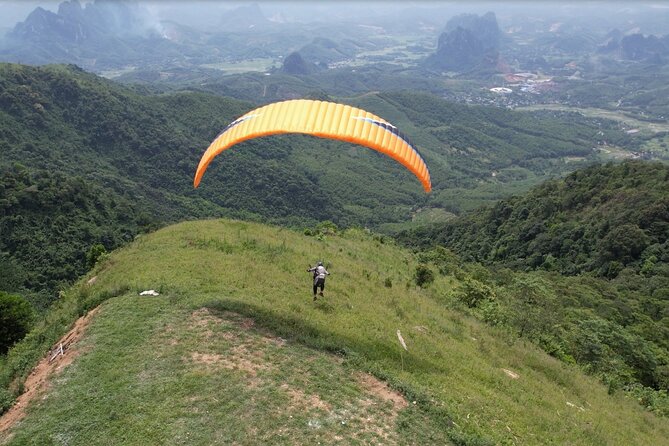
This is the heart of the day. Around 13:00, you shift into slope flights with single-skin gliders, aiming for 10 slope solo flights total across the course.
Flying from a low hill is the point. You’re training core mechanics—balance, control inputs, and landing basics—at a height where you can learn without the stress of going far away. That repetition is valuable. If one run doesn’t click, you get more runs to try again. If one technique works, you repeat it and lock it in.
And you’re doing it in a private training setup, practicing on a low hill with a focus on beginners. You’re not just watching; you’re learning by doing.
The instructor factor: certified athletes and what to ask
Instruction is one of the strongest pieces of this experience. The course is led by certified professional paragliding athletes, and they’re English-speaking. In a real-world course, certification matters because it changes how people teach: you’ll get corrections, not just encouragement.
One review highlighted instructor Kim and the fact that Kim provided the knowledge needed for landing and controlling the glider. That’s the kind of coaching you want during slope training: specific skills, not vague advice.
A small but useful takeaway from another review: ask about how to pose for photos while you’re in the air. If you don’t know what to do, you may find yourself closing your eyes or forgetting the one cue that makes the pictures look better.
Tandem flight: getting the thrill while the pilot handles the heavy lifting
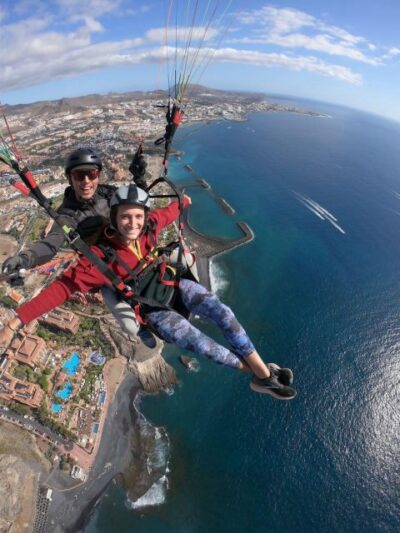
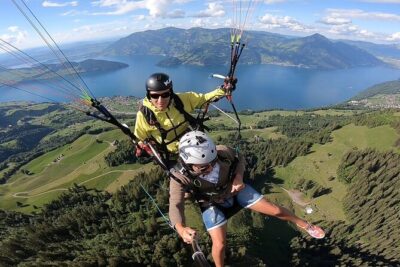
Even with all the solo slope practice, the day includes a tandem flight with a pilot. That means you’ll still get the big-feeling moment—while someone trained manages the flight with you onboard.
For beginners, tandem is a smart bridge. You’ve already learned basic concepts on the hill and on the ground, so the tandem flight isn’t a blind leap. Instead, it becomes a chance to experience the glide in a more complete way while keeping risk controlled by experienced guidance.
Think of tandem as the reward for doing the earlier work. You’ll likely notice how the skills from ground training show up in the way the glider behaves.
Lunch at a private stilt clubhouse (Muong cuisine, no rushing)
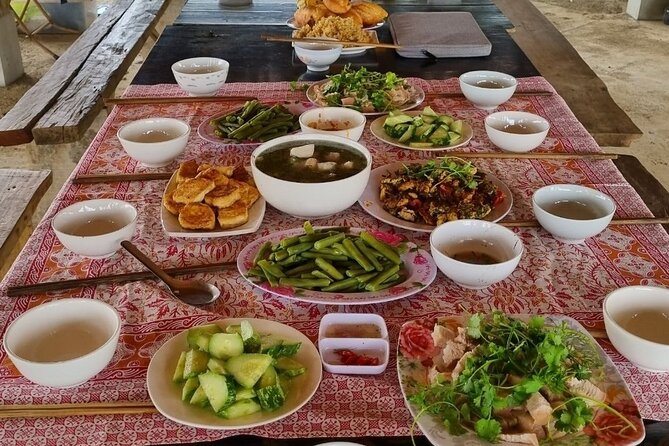
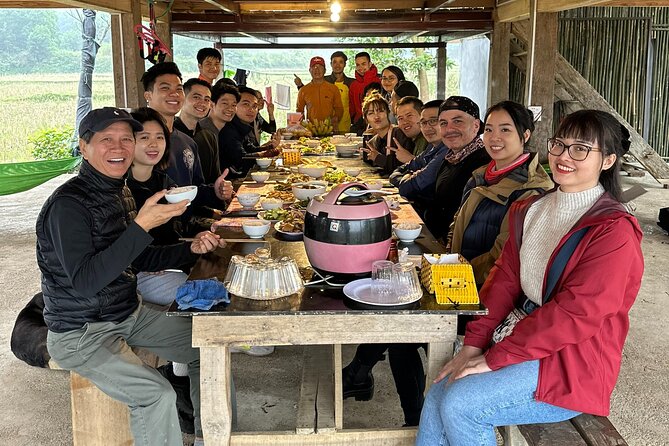
Right after the flying portion, you break for lunch around 11:30. The lunch is Muong cuisine, and it’s served at the private stilt clubhouse tied to the training area.
This detail is more than a meal stop. It’s a recovery checkpoint right in the flow of the day. After time running and practicing control, you’ll want a real reset before the afternoon turns active again.
Also, eating local food on the same grounds where you trained tends to reduce the usual stress of changing locations. You’re not hunting for lunch in a busy area. You’re already where you need to be.
Afternoon trekking and the sunset window
After lunch, you shift into trekking around 14:30. The program frames it as time you can use to go toward a high mountain or enjoy trekking for sunset, depending on your preference.
This part matters because it changes the day from one activity into a mini adventure. Even if paragliding was your main goal, trekking is what makes the trip feel like a Luong Son day rather than a simple transport-and-flight appointment.
Keep in mind the practical side: trekking is still movement, and you’ll already be carrying the fatigue of earlier training. Go with the mindset of pacing. Enjoy the views if conditions are kind, but treat the trek as part of the experience, not a punishment.
Mountain peak bonfire and the closing ceremony
Around 15:00 you have a bonfire at the mountain peak, followed by a closing ceremony around 16:00. This gives the day closure. It’s also when the course spirit shows up: you finish together, you acknowledge what you learned, and you end the experience on a warmer note than just heading back to Hanoi.
The bonfire timing is a nice bridge between daylight and evening moods. If you like ceremonies that feel grounded and local, this final block is a good match.
Who this course suits best (and who should rethink it)
This is a strong fit if:
- you’re a beginner and want a guided intro without prior experience
- you have one day and want both training and a thrill moment
- you like structured learning with repetition (not just one flight and done)
- you want an English-speaking instructor team
It might be less ideal if:
- you’re only interested in one tandem experience and nothing else
- you hate being active on your feet for a big chunk of the day (the schedule includes training and trekking)
- you’re extremely photo-focused and haven’t planned to ask your instructor how to pose for sky pictures
Should you book the one-day Hanoi paragliding combo?
I’d book it if your priority is a compact, beginner-friendly day that teaches you the basics and still delivers the real flying thrill. The value comes from the 10 slope solo flights, the inclusion of a tandem flight, and the fact that instruction is handled by certified athletes in English.
You should also book if you want more than a single moment. The day includes Muong lunch at a stilt clubhouse, trekking, and a mountain peak bonfire. That makes the whole outing feel like a real Luong Son mini-break, not a quick stunt.
If you’re on the fence, here’s the deciding question: do you want to learn and practice (control, landing, technique), or do you just want to ride? This course is built for the first answer.
FAQ
What does the one-day paragliding combo include?
The day includes theory and technique introduction, ground training, slope flights for beginners, a tandem flight with a pilot, Muong cuisine lunch at a stilt clubhouse, trekking, a bonfire at the mountain peak, and a closing ceremony.
How many solo flights do I do in this course?
The plan includes 10 slope solo flights using single-skin gliders.
Do I need prior paragliding experience?
No experience is required. The course is designed as an intro for beginners.
Are instructors English-speaking?
Yes. The course is led by certified professional paragliding athletes who provide instruction in English.
Where does the activity start and end?
It starts at the meeting point in Hanoi (GO! Thăng Long, 222 Đ. Trần Duy Hưng, Trung Hoà, Cầu Giấy, Hà Nội) and ends back at the same meeting point.
Is pickup from Hanoi included?
Pickup is offered from Hanoi, with pickup timing listed at about 8:00.
What’s the schedule like?
The itinerary includes pickup at 8:00, indoor orientation at 9:00, ground training at 10:00, lunch around 11:30, slope flights starting at 13:00, trekking at 14:30, bonfire at 15:00, and a closing ceremony at 16:00.
What gliders do beginners use for the slope flights?
The slope flights are done with single-skin gliders, and the program mentions custom-designed gliders for beginners.
Is this a private group experience?
Yes. It’s a private tour/activity, and only your group participates.
What if I cancel?
You can cancel for a full refund if you cancel up to 24 hours in advance of the experience’s start time (local time rules apply).