REVIEW · RIO DE JANEIRO
Rio de Janeiro: Paragliding Tandem Flight
Book on GetYourGuide →Operated by Rio Hang Gliding · Bookable on GetYourGuide
Rio has plenty of thrills, but tandem paragliding adds a rare kind of calm. You’ll launch from Pedra Bonita and glide through the tropical air with huge views of Rio. It’s a non-motorized flight where the sky does most of the talking.
I especially love the start-to-finish confidence-building—you get a briefing from experienced tandem pilots, plus the harness and safety setup before anything happens. And I like that you land smoothly on São Conrado Beach, then leave with video you can actually share right away.
One thing to plan for: this is weather-dependent, so wind and cloud cover can cause delays (sometimes longer than you expect), even when you’ve booked a set time slot.
In This Review
- Key things to know before you go
- Pedra Bonita: why this Rio launch feels so “you’re really doing it”
- The briefing and gear: how the operation keeps you calm before takeoff
- The takeoff sprint: the moment fear turns into focus
- Mid-flight over Rio: big views, bird sounds, and a peaceful pace
- Landing at São Conrado Beach: the satisfying finish
- Price, value, and the extra costs that can catch you off guard
- Timing and weather: why your “2–3 hours” might stretch
- Meeting point and pickup: keeping your morning simple
- Who should book this (and who shouldn’t)
- Should you book Rio tandem paragliding over São Conrado?
- FAQ
- What’s included in the Rio tandem paragliding flight?
- How long does the experience take?
- Where do I meet the guide, and is pickup included?
- Are there extra fees I should budget for?
- What should I bring and wear?
- Who can’t participate?
Key things to know before you go
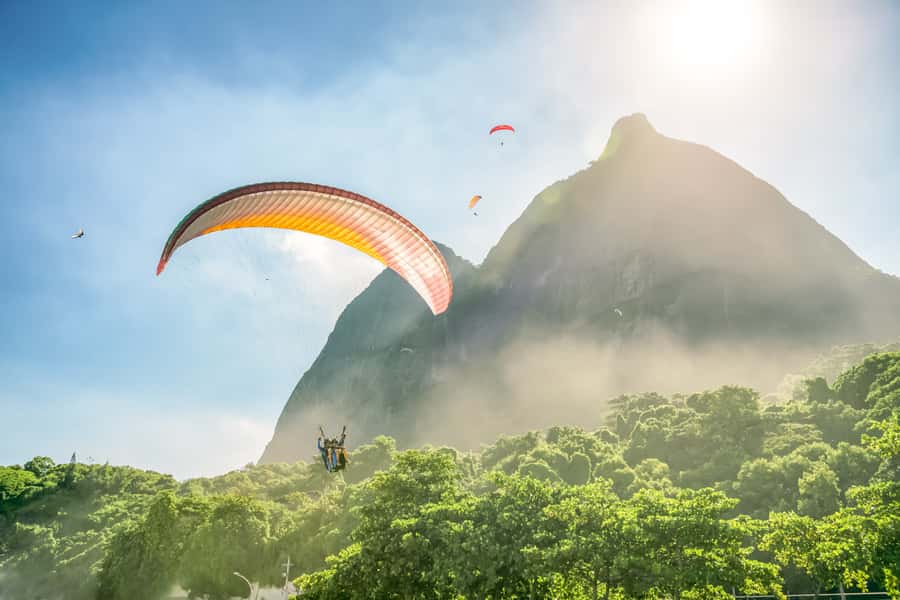
- Pedra Bonita launch: you run straight off a mountain edge (525 meters) for that instant “I’m flying” feeling
- Trained tandem pilots: you’re paired with an instructor and guided through the takeoff process
- Smooth Rio-to-beach flight: you typically glide until landing on São Conrado Beach
- Video included, with add-ons: you get exclusive footage, but side-camera video can cost extra (seen at 200 R$)
- Bird sounds, not engine noise: non-motorized open-air flying means you hear what’s around you
- Small group vibe: it’s set up for a tighter group experience instead of a crowd
Pedra Bonita: why this Rio launch feels so “you’re really doing it”
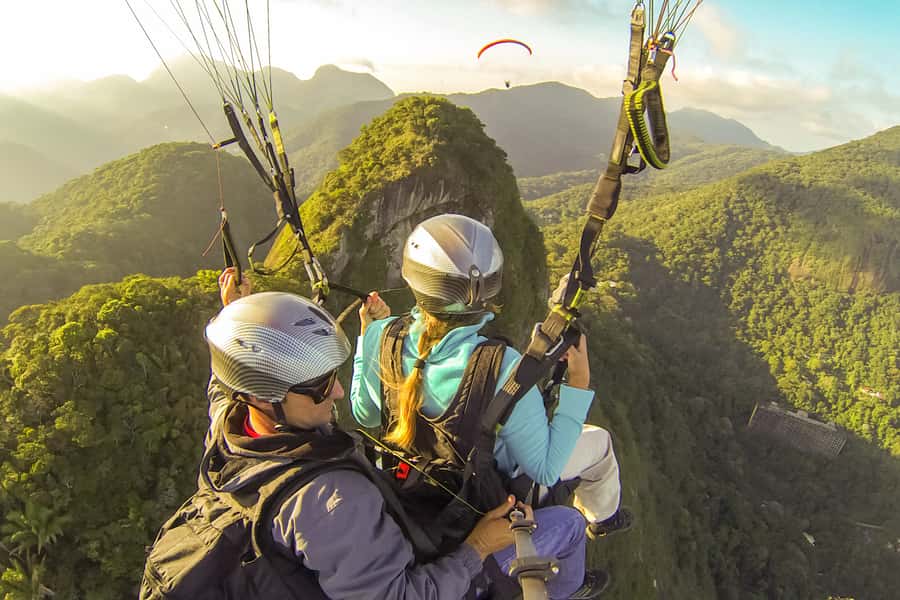
The whole experience hinges on Pedra Bonita, the 525-meter mountain launch. The key detail is not the height on paper—it’s the way the flight starts: you run and then go off the edge with your tandem instructor. That “first second” is intense in the best way. You’re not waiting in a tiny cockpit for something to happen. You’re stepping into the air, right then.
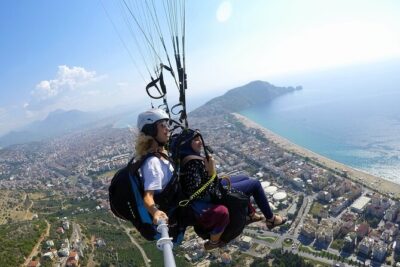
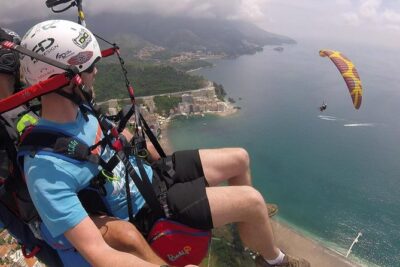
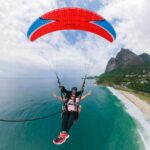
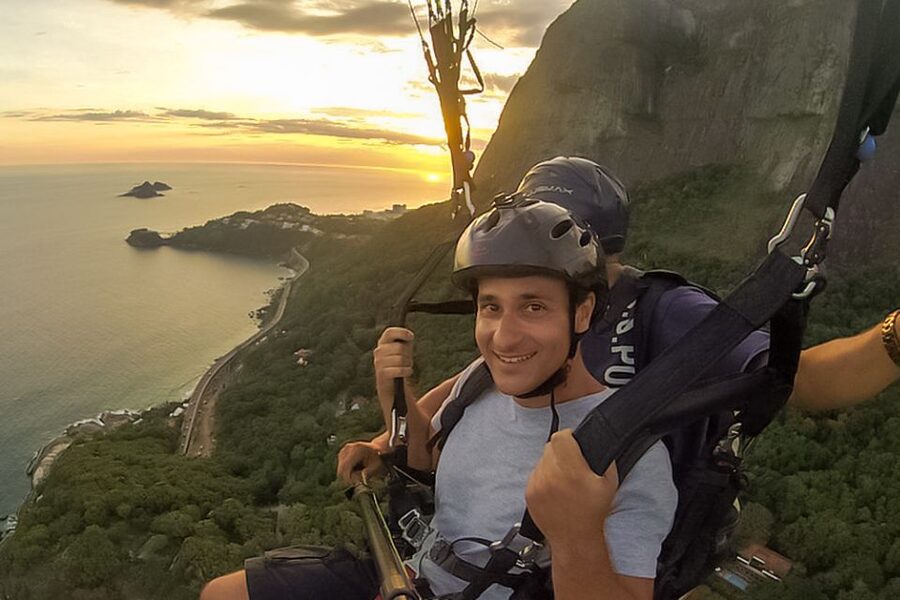
From up above, you’re getting panoramic views of Rio’s landmarks and coastline. And because this is paragliding (not an engine flight), the pacing feels different. You trade speed for presence. Even when you’re excited, you’re also getting that steady, quiet rhythm you only notice when you’re gliding.
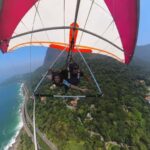
I’d also point out that the Pedra Bonita vibe tends to feel scenic and meaningful. You’re launching from a distinct Rio viewpoint, then drifting toward a beach landing. That whole “from mountain to sea” arc makes the flight feel like one continuous story instead of a quick stunt.
The briefing and gear: how the operation keeps you calm before takeoff
Before you’re anywhere near the edge, you’ll get a short briefing from your tandem pilot. The point isn’t theory. It’s procedure: what you’ll do, what your pilot is doing, and how takeoff works. You’ll also get the harness and safety equipment, then you’re set up for the flight.
In the real world, the biggest factor for first-time flyers is whether the instruction feels clear and calm. You’ll see a strong emphasis on reassurance in how pilots work—names like Klaus/Klaus Koch and Claus come up often, typically for being professional, steady, and friendly. Another guide mentioned, Trota, also gets called out for good communication when conditions cause delays.
Language help matters too. Instructors are listed as Portuguese, English, and Spanish, so you should be able to understand the key points even if you’re not fluent in Portuguese.
Practical tip: wear comfortable shoes you can actually sprint in for takeoff and won’t lose. Flip-flops and sandals are not allowed. That’s not a fashion rule; it’s part of how you stay balanced during the run.
The takeoff sprint: the moment fear turns into focus
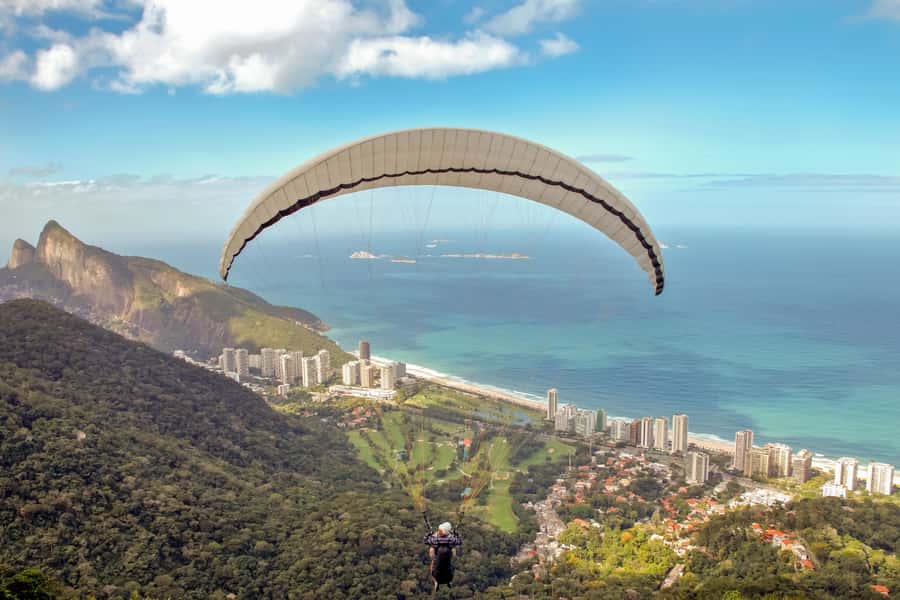
Takeoff is the part that spikes adrenaline—because you’re running off a mountain. If you’re afraid of heights or speed, that first step can feel like a lot. The briefing is designed to shrink that fear by turning it into a simple task: do your role, trust the setup, and let your pilot handle the wing.
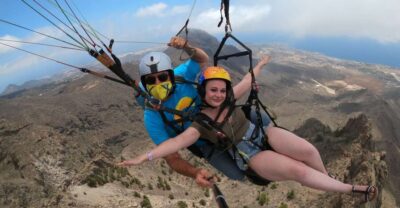
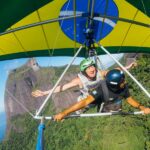
Once you’re off the edge, the sensation changes fast. You go from “I’m doing something risky” to “I’m floating.” The flight is smooth and open-air, and because it’s non-motorized, you don’t get engine vibration or noise. You’re also more likely to notice small sounds, including tropical birds, as you cruise through the sky.
Many first-timers go into it thinking they’ll spend the whole flight panicking. The better plan is the opposite: treat the first seconds as a short hurdle. After that, the brain adjusts quickly, and the calm sets in.
If you want extra engagement, you might be given the chance to control the paraglider during the flight. That isn’t guaranteed in the details, but it’s something you can ask about on-site during the briefing.
Mid-flight over Rio: big views, bird sounds, and a peaceful pace
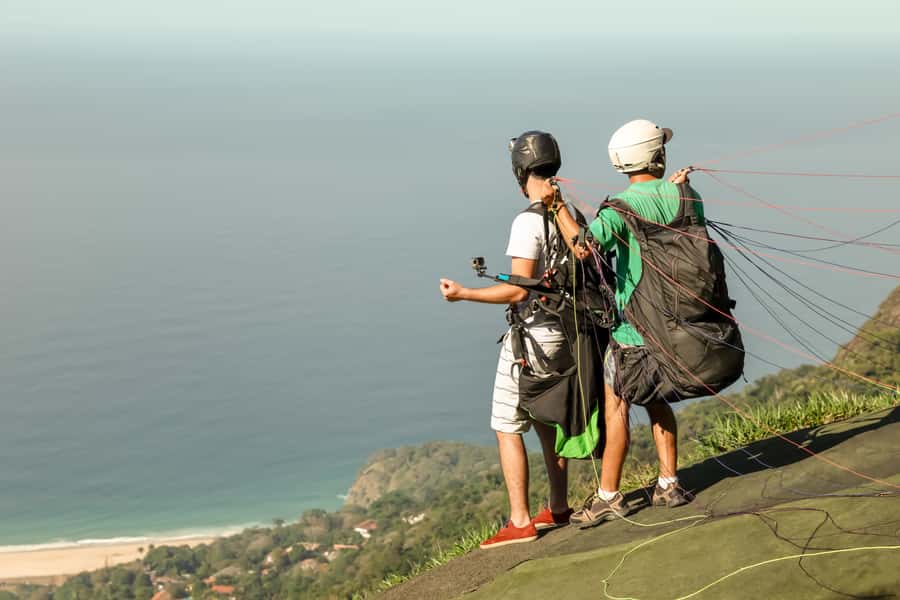
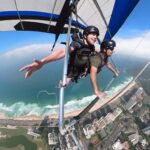
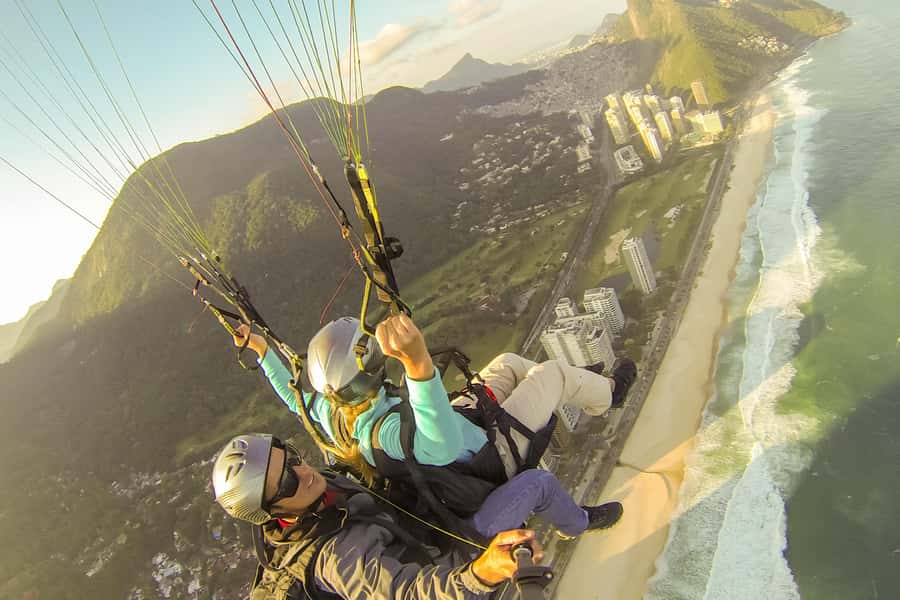
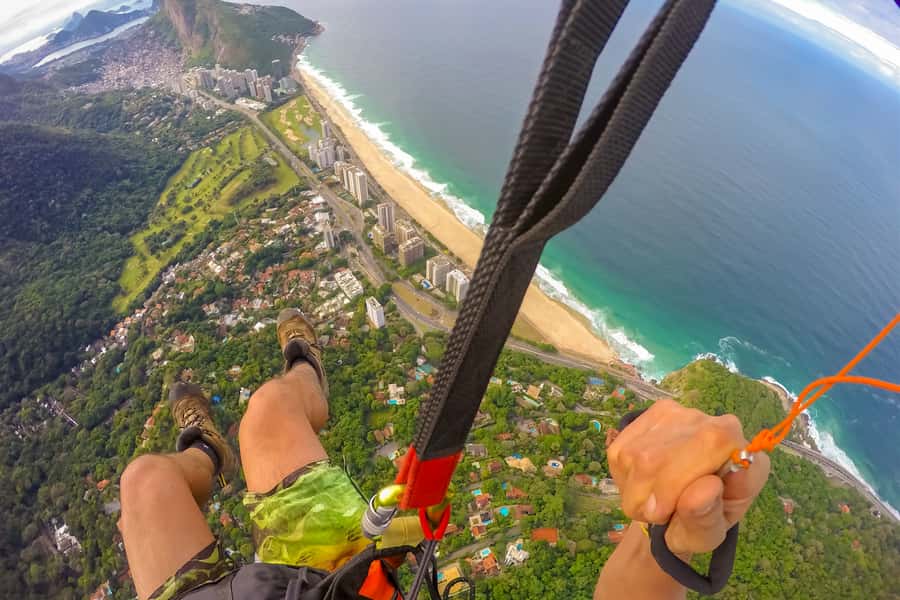
What you’re really paying for is the perspective. You’ll glide over Rio de Janeiro with incredible panoramic views of landmarks and the coastline. It’s not just pretty—it’s legible. From the air, Rio’s scale clicks into place in a way photos can’t fully replicate.
Another “you’ll notice this” feature is sound. Because the wing is non-motorized and open-air, you’re not stuck with the constant roar of an engine. The flight feels tuned to the environment, and yes, you may hear tropical birds as you cruise.
Timing can also affect what you see. Golden-hour light has been mentioned in past experiences, and that’s the kind of advantage you might hope for if your flight lands around late afternoon. Still, your day isn’t guaranteed—conditions decide when you launch.
Also keep in mind that delays can change the order of your afternoon. One day might be perfect visibility; another might be cloud cover and a longer wait. Either way, once you’re airborne, the glide tends to feel like the highlight, not the compromise.
Landing at São Conrado Beach: the satisfying finish
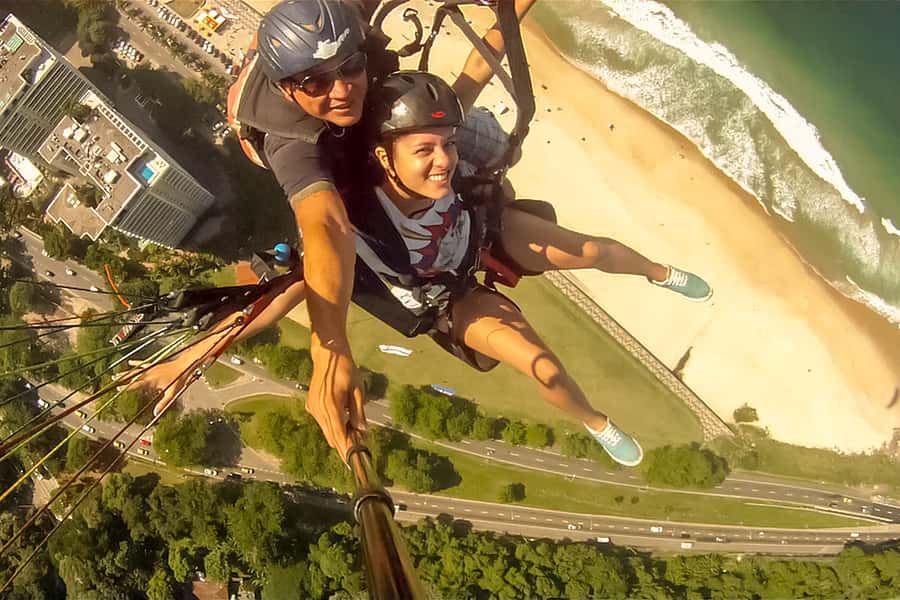
After enjoying the views over Rio, you’ll land smoothly on São Conrado Beach. Smooth landing matters more than people think. It’s part of what makes this feel like a true experience rather than a stressful drop.
The overall structure is designed to reduce your workload. You take off with your pilot and then, at landing, you’re guided through a safe arrival. Once you’re down, you’re not stuck wondering how to get home. The experience includes transport to the launch site, and it’s set up so you can return from the beach area using normal options unless you selected pickup.
There’s also a social piece: your adventure includes exclusive video footage taken during your flight. That’s not just a souvenir. It’s a way to turn a “I can’t explain what I saw” moment into a story you can share without relying on someone else’s imagination.
Price, value, and the extra costs that can catch you off guard
The listed price is $219 per person, and what helps it feel fair is what’s included: tandem flight with an instructor, harness and safety equipment, and transport from the meeting point to the launch site. That’s a lot of overhead for a quick adventure.
The “watch your wallet” part is that some costs are not included. You should budget for:
- Launch usage fee: 120 Brazilian Reais, paid in cash (card use can add a 10% fee charged by the local hang gliding club)
- Flight insurance: not included
- Video upgrades: the included footage is not always the full set of camera angles
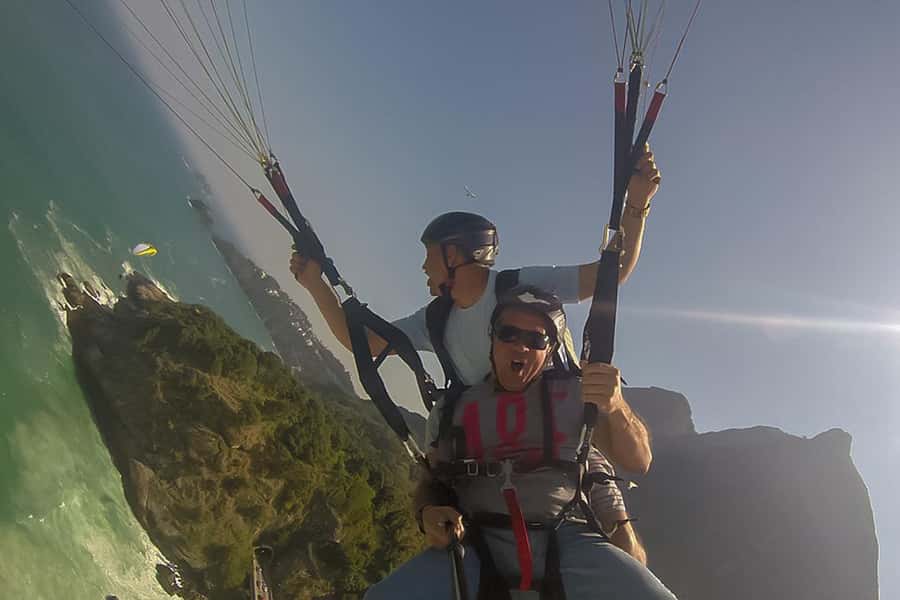
One detail that comes up clearly: you’ll receive the exclusive video taken during your flight, and it’s typically front-camera footage included. If you want more angles, side-camera video can cost extra—seen at 200 R$. There’s also mention of a possible 360 option for additional purchase, with the cost described as high.
My take on value: if you like the idea of a real, filmed memory, this package works well. If you only care about going once and don’t care about footage, you can still feel good about the price because the core flight experience (instructor, equipment, and launch-to-air-to-beach flow) is the real deliverable.
Timing and weather: why your “2–3 hours” might stretch
This activity runs about 2–3 hours, but it’s explicitly dependent on meteorological conditions. That’s not a small footnote—it’s the reason your day can change.
Wind and cloud cover can delay takeoff. In one case, people waited for a long time due to conditions not cooperating. When this happens, the experience isn’t usually chaotic; it’s more about waiting at the launch site until conditions are safe. Guides are expected to keep you updated, and in at least one situation, a guide named Trota kept guests comfortable while waiting.
What should you do with that? Plan your day loosely. If you schedule something tight right after your flight window, you’ll risk stress. If your schedule is flexible—lunch, a beach stroll, and a slow plan—you’ll handle delays with less frustration.
Also remember the season effect. Cooler winter days can call for a sweatshirt. You don’t want to be cold before takeoff, and you also don’t want anything heavy that will be annoying during the run.
Meeting point and pickup: keeping your morning simple
You meet your guide in front of the Hortifrutti Grocery Store. That’s your anchor. From there, you’re set up for transport to the launch site.
Pickup is optional. If you select it, you’ll likely get help getting to the meeting/launch flow at the scheduled time. Just read what’s included in your booking: transfers back after the end of the activity are not automatically included unless you’ve selected pickup. A common real-world workaround is to take a taxi from the beach area since the location is reachable.
My advice: don’t assume a full round-trip transfer. Assume you’ll get to the activity smoothly, then handle your return on your terms—especially if you want beach time after landing.
Who should book this (and who shouldn’t)
This is an outdoor activity that requires some basic physical ability—mainly for the takeoff role.
It’s listed as not suitable for:
- Children under 14
- People with mobility impairments
- Wheelchair users
- People over 264 lbs (120 kg)
- Unaccompanied minors
And minors under 18 need a legal guardian and picture IDs for both the minor and guardian.
Seniors can fly as long as they’re capable of following the takeoff procedure. The bigger point is that you should be comfortable running during takeoff. Wear shoes that won’t slip, and avoid anything that adds risk to your footing.
If you have any doubt about whether you can do the takeoff run, treat that as a real decision point. This flight is tandem, but your body still has to do its part.
Should you book Rio tandem paragliding over São Conrado?
Book it if you want a Rio experience that feels both thrilling and strangely peaceful. The combo of open-air non-motorized flight, bird sounds, and a mountain-to-beach route is hard to match with typical sightseeing.
It’s also a good choice if you value a filmed memory. The included exclusive video saves you from trying to capture the moment with a shaky phone. If you’re the type who loves extra camera angles, be ready for add-ons like side-camera footage.
Don’t book it if your schedule is rigid and you hate waiting. Weather can delay takeoff, and that’s part of the deal in paragliding. Also skip it if you can’t do the takeoff run safely or if you fall into the listed mobility and weight limitations.
If you’re flexible with timing and you can meet the basic physical requirements, this is one of those bucket-list days that lives up to its promise—because once you’re in the air, it stops being an activity and starts being a view you’ll remember.
FAQ
What’s included in the Rio tandem paragliding flight?
You get a paragliding tandem flight with an instructor, plus the harness and safety equipment. Transport from the meeting point to the launch site is also included.
How long does the experience take?
Plan for 2 to 3 hours total. Starting times depend on availability and current meteorological conditions, which can affect delays.
Where do I meet the guide, and is pickup included?
Meet your guide in front of the Hortifrutti Grocery Store. Pickup is optional, and pickups (when selected) are arranged for the time chosen during booking. Transfers back after the activity are not included unless pickup was selected.
Are there extra fees I should budget for?
Yes. You should budget for the launch usage fee of 120 Brazilian Reais cash. Flight insurance is not included. Also, additional video camera angles can cost extra (for example, side-camera video has been reported as an extra 200 R$).
What should I bring and wear?
Bring your passport or ID card and wear comfortable shoes. Sandals or flip-flops are not allowed.
Who can’t participate?
The activity is not suitable for children under 14, people with mobility impairments, wheelchair users, and people over 264 lbs (120 kg). Unaccompanied minors are not allowed, and minors under 18 must be accompanied by a legal guardian with picture IDs.